
Why Network Infrastructure Experts are Crucial for Your Business
For businesses seeking to optimize their digital backbone, understanding the critical roles played by network infrastructure experts is key. These specialists ensure your network is robust, secure, and ready for future demands.
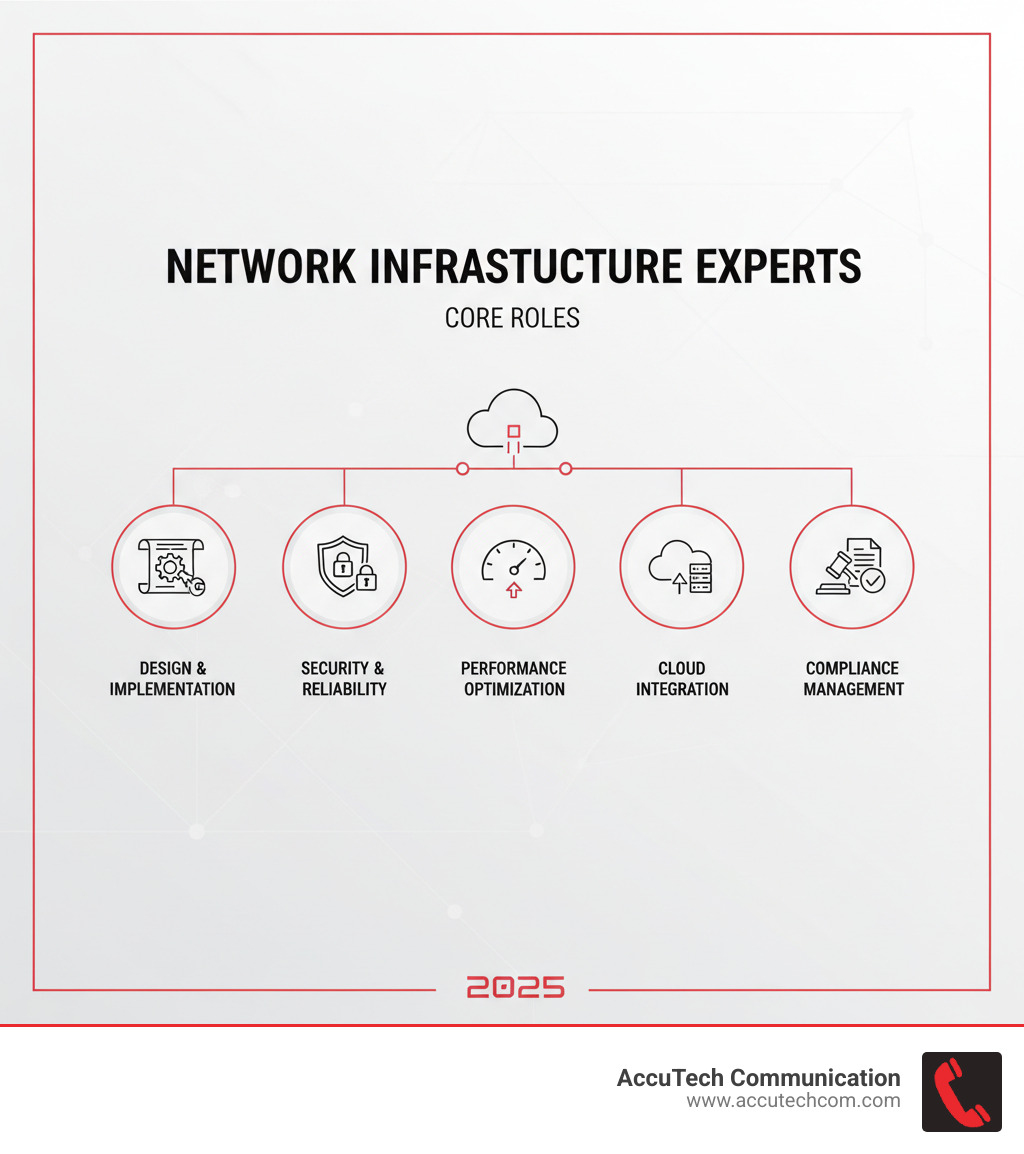
Here’s what network infrastructure experts do:
- Design and Implement: They create and build network systems, including hardware and software.
- Ensure Security & Reliability: Experts protect networks from attacks and ensure continuous operation.
- Optimize Performance: They fine-tune networks for speed, efficiency, and user experience.
- Facilitate Cloud Integration: They connect your on-premise systems with cloud services and hybrid environments.
- Manage Complex Environments: Experts handle intricate Wide Area Networks (WANs) and data centers.
- Tailor Solutions: They customize network setups to fit your unique business needs and goals.
- Maintain Compliance: They ensure networks meet industry regulations and security standards.
In today’s digital world, network infrastructure experts are more critical than ever. Without the right mix of vigilance and skill, a network can fail to meet user needs or fall victim to cyber threats. The global network infrastructure market is rapidly expanding, projected to reach USD 65.8 billion by 2030, showing the increasing demand for specialized knowledge.
For mid-to-large businesses, especially in sectors like healthcare, a reliable and secure network is not just an advantage; it’s the foundation of all operations. Outdated systems can lead to costly downtime, security vulnerabilities, and hinder productivity. This guide explores how these specialists are vital for building robust, future-ready networks that support growth and innovation.
I’m Corin Dolan, owner of AccuTech Communications, and I’ve dedicated over three decades to building effective communication backbones for businesses. As a seasoned network infrastructure expert, I’ve seen how strategic planning and expert implementation can transform an organization’s capabilities. Our collective expertise helps businesses steer complexity and build adaptive environments.
Network infrastructure experts terms made easy:
The Bedrock of Your Business: Core Components of Modern Network Infrastructure
Every successful business, no matter its size, runs on a hidden powerhouse: its network infrastructure. Think of it as the nervous system of your company, connecting every device, every person, and every piece of information. It’s a carefully woven mix of physical gear, smart software, and the very cables that carry your data. Understanding these core parts is the first step to truly appreciating how network infrastructure experts keep your business humming.
So, what exactly makes up this vital system? It’s a blend of several key ingredients working together seamlessly:
First, we have the Hardware. These are the tangible devices you can see and touch (or at least know are there!). We’re talking about Routers that smartly direct your data to the right place, whether it’s down the hall or across the internet. Then there are Switches, which connect all the devices within your office, letting them chat with each other at lightning speed. And of course, the ever-vigilant Firewalls, standing guard to protect your network from unwanted visitors. Lastly, Access Points are your friendly neighborhood Wi-Fi hubs, making sure your wireless devices can join the party.
Next up is the Software, the brains behind the operation. This includes Network Operating Systems (NOS), which are the specialized programs that tell your routers and switches how to do their jobs. It also covers clever tools for managing and monitoring your network, and even automation software that can handle routine tasks for you.
And finally, the Physical Infrastructure – the unsung heroes that actually move your data. This means all the Structured Cabling, both fiber optic cabling and copper cabling, that act as the highways for your information. It also includes the Racks and Enclosures that neatly house all your valuable network gear, keeping it safe and sound.
It’s a lot to consider, right? With so many businesses moving to the cloud – a massive 75% of enterprise workloads are expected to be there by 2025 – having a network that can keep up is non-negotiable. This means your foundational infrastructure needs to be rock-solid, ready for growth, and super secure.
Understanding the Physical Layer
Now, let’s dig a little deeper into that physical infrastructure. This is where your data literally travels, making it the bedrock of everything else. For businesses here in Massachusetts, New Hampshire, and Rhode Island, getting this ‘physical layer’ right from the start is absolutely vital for smooth sailing.
At the heart of it is structured cabling. This isn’t just about throwing wires together; it’s a carefully planned system of cables and connections, all built to industry standards. It’s designed for scalability, meaning your network can grow as your business does, and impeccable cable management, which keeps everything tidy, easy to find, and simple to maintain. We pride ourselves on providing top-notch structured cabling services, ensuring your network’s foundation is built to last.
When it comes to speed and handling massive amounts of data, especially over longer distances or where electrical interference is a concern, fiber optic cabling is often the champion. Imagine transmitting data at the speed of light! It’s perfect for data centers and large campuses. Our team specializes in professional fiber optic cabling installation, giving your mission-critical applications the superhighway they deserve.
And for those central hubs of information, your data centers, a proper data center build-out goes beyond just cables. It includes the careful placement of racks and enclosures to organize equipment, along with innerduct and conduit systems that protect those precious cables and make future upgrades a breeze. This careful planning ensures everything stays cool, secure, and ready for whatever comes next.
The Logic Layer: Hardware and Software
Beyond the physical wires and boxes, there’s a whole world of intelligence working behind the scenes – what we call the logic layer. This is where smart hardware and sophisticated software team up to manage, secure, and fine-tune every bit of data flowing through your network. This is truly where network infrastructure experts shine, configuring these complex systems to perfectly match your business’s unique needs.
Keeping your network safe is a top priority, which is why Network Security Hardware is so crucial. Think of specialized devices like next-generation firewalls and intrusion prevention systems that are constantly on guard, sniffing out threats and keeping your digital doors locked tight. They’re like the elite security team for your data.
Then there’s Traffic Management. Ever been stuck in a digital traffic jam? That’s what happens without proper management! Devices like load balancers act like expert traffic cops, directing network requests efficiently across your servers. This ensures your applications are always available and performing at their best, even during peak times.
To keep an eye on everything, Network Monitoring Software is essential. These tools give you a clear view of how your network is performing, helping to spot any slowdowns or potential issues before they become big problems. Being proactive with monitoring can save you a lot of headaches – and money – considering network downtime can cost thousands of dollars per minute!
Looking to the future, Automation and Virtualization are game-changers. Technologies like Software-Defined Networking (SDN) and Network Functions Virtualization (NFV) are making networks more flexible and easier to manage. They allow for routine tasks to be automated and network services to be virtualized, giving your business incredible agility and efficiency.
When these physical and logical layers are designed and installed correctly, and then expertly configured by network infrastructure experts, they create a powerful, secure, and reliable network. It’s the kind of network that not only supports your business today but also adapts and grows with you into tomorrow.
The Strategic Advantage: How Network Infrastructure Experts Drive Business Success
Your network infrastructure isn’t just a bunch of cables and blinking lights in a back room somewhere. It’s the nervous system of your entire business. And when it’s working rightwhen it’s designed, secured, and optimized by people who really know what they’re doingit becomes a genuine competitive advantage.
Here’s something worth considering: companies with a clear IT strategy and adequate infrastructure are 2.5 times more likely to achieve their business goals. That’s not a small difference. That’s the gap between struggling to keep up and pulling ahead of the competition.

When you partner with network infrastructure experts, you’re not just fixing problemsyou’re building a foundation that drives real business results. Better security means you’re protecting what matters most. Improved reliability means your team can actually do their work without constant interruptions. Improved performance translates directly to happier employees and customers. And perhaps most importantly, you gain the flexibility to grow and adapt without your technology holding you back.
Ensuring Security, Reliability, and Compliance
Let’s talk about what keeps business owners up at night. Cybersecurity threats aren’t some distant possibility anymorethey’re a daily reality. A single breach can cost you customers, revenue, and years of hard-earned reputation. The average cost of network downtime ranges from $5,550 to $9,000 per minute, depending on your industry. That’s not a typo.
This is where network infrastructure experts earn their keep. We don’t just slap a firewall on your network and call it a day. We design security into every layer of your infrastructure, from the ground up.
Redundancy and failover solutions are built into the architecture so that if one component fails, backup systems automatically take over. Your employees keep working. Your customers stay connected. Business continues. It’s like having a safety net that you hope you’ll never need, but you’re incredibly grateful for when you do.
Data protection involves multiple strategies working togetherencryption that scrambles sensitive information, access controls that ensure only authorized people can reach critical systems, and data loss prevention measures that stop information from walking out the door. For healthcare providers in Massachusetts, New Hampshire, and Rhode Island, this isn’t optional. It’s the law.
Speaking of which, compliance requirements like HIPAA and PCI DSS can feel overwhelming. The regulations are complex, the penalties for violations are severe, and the rules seem to change constantly. Our team stays on top of these requirements so you don’t have to become a compliance expert on top of everything else you’re managing. We build networks that meet regulatory standards from day one, maintain detailed audit trails, and implement the specific security controls required for your industry.
Proactive monitoring means we’re watching your network around the clock, looking for anything unusual. A spike in traffic from an unexpected source. An attempted login from a suspicious location. A device behaving oddly. We catch these issues early, often before they become problems, and definitely before they become disasters.
Boosting Productivity and Achieving Cost Savings
Here’s something we’ve seen time and again: when your network works smoothly, your entire business runs better. Employees aren’t sitting around waiting for files to load. Applications respond instantly. Video calls don’t freeze at critical moments. It sounds simple, but the impact on productivity is profound.
Optimized performance means we’ve tuned your network for speed and efficiency. We’ve eliminated bottlenecks, increased bandwidth where it’s needed most, and ensured that your most critical applications get priority. The result? Your team spends their time working instead of waiting.
Application availability is about making sure the tools your business depends on are always accessible. Your CRM system, your financial software, your communication platformsthey need to be there when you need them. Period. We design networks with this reliability built in, so “the system is down” becomes a phrase your team rarely hears.
For businesses operating across multiple locations in Massachusetts, New Hampshire, and Rhode Island, a well-designed network enables seamless collaboration. Your team in Boston can work as easily with colleagues in Manchester as if they were in the next office. Distance stops being an obstacle.
Now let’s talk about something every business owner cares about: the bottom line. Good network infrastructure actually saves you money, often in ways you might not expect.
Replacing legacy systems with modern, efficient equipment reduces your energy bills and maintenance costs. Those old servers running in the corner? They’re probably costing you more to keep alive than they’re worth. Newer systems do more while consuming less power and requiring less hands-on maintenance.
Predictable operational expenses replace the chaos of constant emergency repairs and unexpected failures. You can budget more accurately when you’re not dealing with surprise hardware failures or emergency service calls. A well-maintained network has fewer surprises.
Efficient resource allocation ensures you’re not wasting money on unnecessary hardware or unused bandwidth. We help you right-size your infrastructurenot too much, not too little, but just what your business actually needs. As you grow, we help you scale appropriately.
Here’s another reality: the demand for skilled IT professionals is expected to grow by 6% by 2031, and finding qualified people is already challenging. Partnering with network infrastructure experts gives you access to deep expertise without the overhead of hiring multiple specialists. Your internal IT team can focus on strategic initiatives while we handle the complex networking challenges that require specialized knowledge.
When your network is secure, reliable, and performing at its best, your entire business benefits. That’s not just an IT winit’s a business win.
Building for Tomorrow: Advanced Solutions and Future-Proofing
The digital landscape never stands still. What feels today can become outdated tomorrow, leaving businesses scrambling to catch up. For companies across Massachusetts, New Hampshire, and Rhode Island, the key to staying competitive isn’t just keeping pace with change—it’s building a network infrastructure that can adapt and grow alongside your business.
This means thinking beyond immediate needs and embracing advanced solutions like cloud integration, hybrid environments, and emerging technologies that will shape the next decade of business operations.
How do network infrastructure services support cloud integration and hybrid environments?
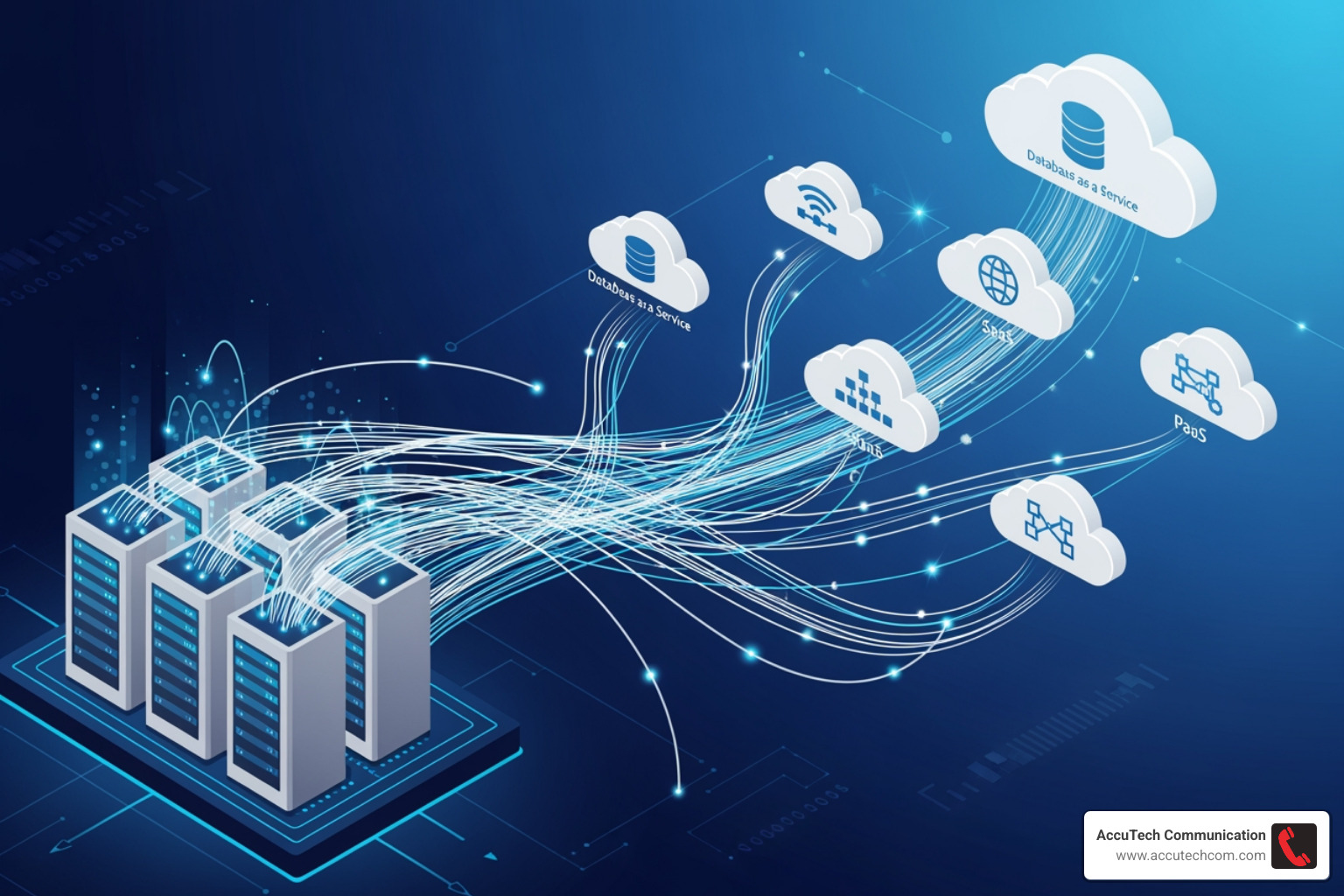
The numbers tell a compelling story: 75% of enterprise workloads are expected to migrate to the cloud by 2025. This isn’t just a trend—it’s a fundamental shift in how businesses operate. But cloud adoption doesn’t mean abandoning everything you’ve built on-premises. That’s where hybrid environments come in.
Our network infrastructure experts specialize in creating seamless bridges between your existing on-premises systems and cloud platforms. We design and implement solutions that provide secure, high-performance connectivity across both environments. This includes configuring direct connections, optimizing network routes, and ensuring your security policies remain consistent whether data lives in your server room or in the cloud.
The beauty of a well-designed hybrid environment is flexibility. You can keep sensitive data on-premises where you have complete control, while leveraging the cloud’s scalability for applications that need to grow rapidly. It’s not an either-or decision—it’s about finding the right balance for your specific needs.
How do experts tailor network infrastructure solutions to meet specific business requirements?
Here’s something we’ve learned after three decades in this business: cookie-cutter solutions rarely work. Every organization has its own unique challenges, compliance requirements, and growth trajectories.
That’s why we start every engagement with a deep dive into your operations. We want to understand not just your current technology landscape, but your strategic goals for the next three to five years. Are you planning to expand into new locations? Do you need to support remote workers? Are you in healthcare and need to maintain strict HIPAA compliance? Is IoT readiness critical for your manufacturing operations?
We tailor every aspect of the network—from hardware selection to software configuration to security protocols—to align with your specific objectives. A regional healthcare provider needs a very different infrastructure than a manufacturing firm, even if they’re similar in size. Our solutions are precisely engineered for your success, not adapted from someone else’s blueprint.
What is the value proposition of partnering with network infrastructure experts for future growth?
Think of your network infrastructure as the foundation of a building. If it’s solid and well-designed, you can add floors, renovate rooms, and adapt the space as your needs change. But if the foundation is weak or poorly planned, every change becomes a major headache.
When you partner with us, you’re investing in a scalable, adaptable, and secure foundation for your future. We design networks that can accommodate new technologies, handle increased user demand, and support expanding operations without requiring costly overhauls. This proactive approach protects your investment and positions your business for sustainable growth.
We’ve seen too many companies struggle because they chose short-term savings over long-term planning. They end up paying far more in emergency fixes, downtime, and lost productivity than they would have spent building it right the first time.
Embracing the Latest Trends in Networking
The networking world moves fast, with innovations constantly emerging to address the growing demands of modern business. Our team stays at the forefront of these developments, bringing the most impactful technologies to your organization.
What are the latest trends in network infrastructure, such as SD-WAN and Wi-Fi 6?
SD-WAN (Software-Defined Wide Area Network) has revolutionized how businesses manage their wide area networks. Instead of being locked into expensive, inflexible connections, SD-WAN separates the network hardware from its control mechanisms. This gives you remarkable flexibility to use multiple connection types—MPLS, broadband, LTE—and dynamically route traffic for optimal performance.
The benefits are substantial: reduced costs, improved visibility into network traffic, consistent application experience across all locations, and improved security through segmented networks. For businesses with multiple offices or remote workers, SD-WAN can be transformative.
Wi-Fi 6 (802.11ax) represents the latest generation of wireless technology, and it’s not just incrementally better—it’s a significant leap forward. You get faster speeds, dramatically less congestion in crowded environments, and improved battery life for connected devices. This matters especially for businesses with high-density wireless usage like offices, educational facilities, or public venues. For more insights on its impact, check out Wi-Fi 6: Faster Speeds, Less Congestion, and Longer Battery Life for the Public Sector.
5G integration is opening new possibilities for high-speed wireless connectivity, particularly useful for remote locations or as backup for wired connections. As 5G networks expand, we’re seeing more businesses leverage this technology for improved mobility and redundancy.
Network automation is another game-changer. By automating routine tasks, configurations, and troubleshooting processes, we reduce human error, speed up deployment, and free your IT staff to focus on strategic initiatives rather than mundane maintenance.
Here’s how different WAN solutions compare:
| WAN Solution Type | Key Benefits |
|---|---|
| SD-WAN | Cost-effective use of multiple connection types, improved application performance, centralized management, improved security through traffic segmentation, automatic failover capabilities |
| MPLS | Predictable performance, built-in Quality of Service (QoS), reliable for voice and video, strong service level agreements (SLAs) |
| Broadband Internet | Lower cost, widely available, flexible bandwidth options, good for non-critical applications |
| 4G/5G Wireless | Rapid deployment, excellent for remote locations, valuable backup connectivity, mobility support |
| Hybrid Solutions | Combines benefits of multiple technologies, optimizes cost and performance balance, provides redundancy |
Key Considerations for Data Center and WAN Environments
Whether you’re managing a single data center or a complex network spanning multiple locations, certain considerations remain critical for success.
Data center health checks should be regular and thorough. We assess everything from physical infrastructure and cooling systems to network performance and security posture. These proactive evaluations identify potential issues before they become costly problems.
Microsegmentation has become essential for modern data centers. By creating secure zones within your network and controlling traffic flow between them, you dramatically reduce the risk of lateral movement by attackers. If one segment is compromised, the damage is contained rather than spreading throughout your entire network.
For businesses with multiple locations, branch network optimization and centralized management make operations smoother and more efficient. You can deploy consistent policies, monitor performance from a single dashboard, and troubleshoot issues quickly regardless of where they occur.
Multi-cloud connectivity is increasingly important as businesses leverage services from different cloud providers. We ensure your network can seamlessly and securely connect to multiple cloud environments, giving you the flexibility to choose the best services without connectivity becoming a bottleneck.
Our approach to data center build-outs incorporates all these considerations, creating environments that are not just functional today but ready for tomorrow’s challenges. We’ve been doing this since 1993, and we’ve learned that the best networks are those designed with both current needs and future possibilities in mind.
